What Happens When AI Feels Easier Than People
💡 Tip: Highlight any quote from this article to create a beautiful image card perfect for sharing on Instagram Stories!
By Dr. Sehrish Ali••243 views
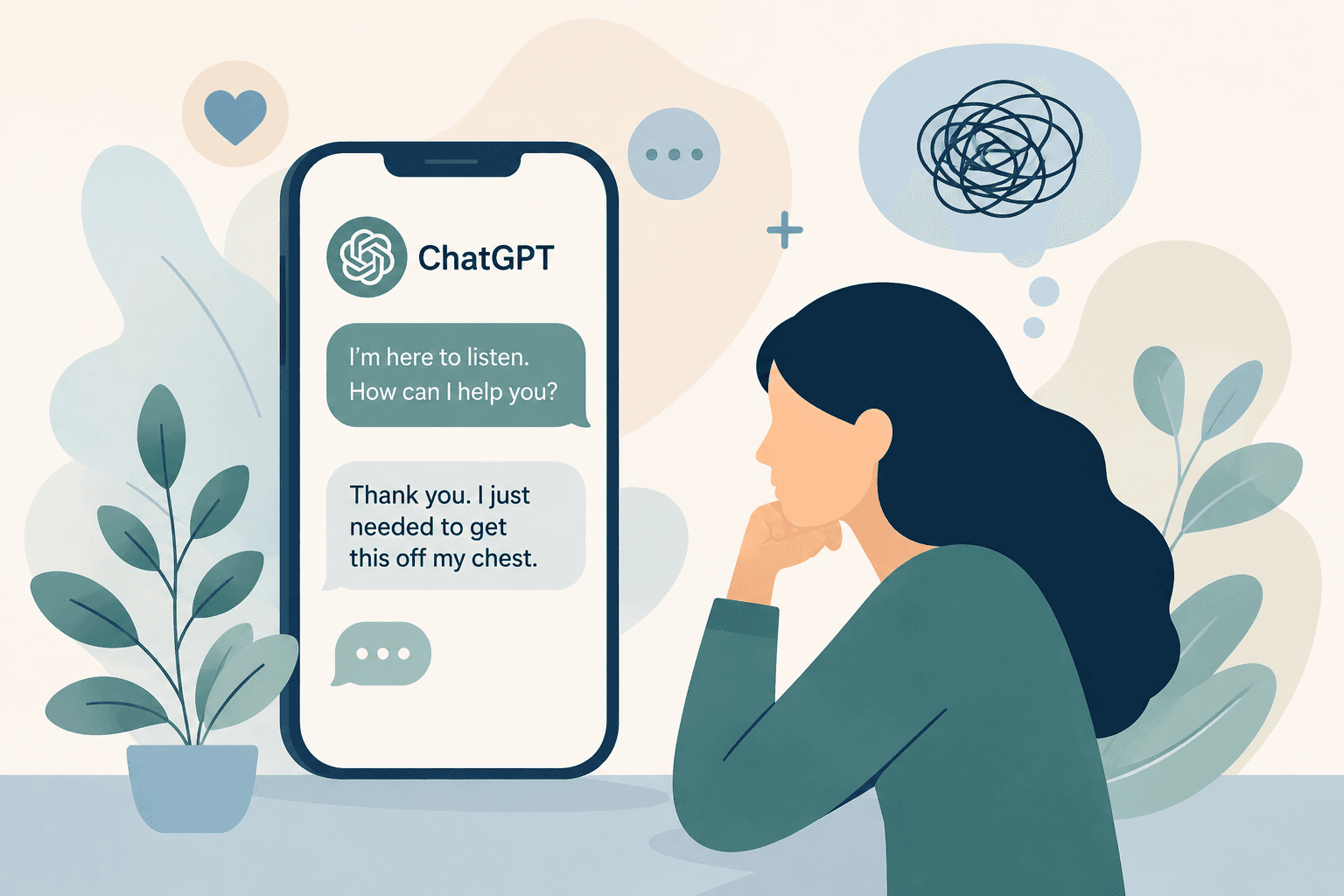
Lately, I’ve had several clients mention using ChatGPT to vent, process emotions, or work through relationship situations before talking to another person.
And honestly, I understand why.
Usually it happens late at night after an argument, during moments of anxiety, after a difficult interaction at work, or when someone feels emotionally overwhelmed and does not want to “burden” another person. So they open ChatGPT and begin typing.
Many clients describe the experience as surprisingly relieving.
“It helped me calm down.”
“It helped me organize my thoughts.”
“It felt easier than talking to someone.”
“It actually helped me figure out what I was feeling.”
I think there is real value in acknowledging that honestly instead of immediately dismissing it.
Because in some ways, tools like ChatGPT can be helpful.
They can slow impulsive reactions.
They can help people name emotions more clearly.
They can create space between feeling and reacting.
They can help someone process before sending the text they may later regret.
For people who feel isolated, emotionally overwhelmed, ashamed, or unsupported, even having a place to externalize thoughts can feel regulating.
That relief is real.
But emotional relief and emotional growth are not always the same thing.
The Part I Think We Need to Talk About More Honestly
What concerns me clinically is not that clients are occasionally using AI to process emotions.
People have always searched for spaces to think out loud safely. Journals, late night phone calls, online forums, voice notes, friends, prayer, therapy. This is not entirely new.
What is new is the experience of interacting with something that feels emotionally responsive in ways human relationships often cannot sustain.
ChatGPT responds immediately.
It adapts quickly.
It remembers details.
It reflects language back smoothly.
It does not become emotionally exhausted.
It does not need reassurance in return.
It does not have competing emotional needs.
And over time, I think that matters psychologically more than we fully understand yet.
Because I am starting to notice a subtle shift in how some clients talk about human relationships afterward.
Not dramatically.
Not consciously.
But quietly.
Human conversations start feeling slower.
Messier.
More disappointing.
Less emotionally efficient.
And that is the part I think deserves deeper attention.
Therapy Was Never Meant to Feel Frictionless
One of the biggest misconceptions about therapy is that good therapy always feels validating, soothing, and emotionally comfortable.
Real therapy is much more complex than that.
A skilled therapist is not only listening to the words being said. They are paying attention to what is being avoided, minimized, intellectualized, defended against, or repeated relationally in real time.
Sometimes therapy feels relieving.
Sometimes it feels uncomfortable.
Sometimes it feels exposing.
Sometimes growth happens in silence.
Sometimes it happens through rupture and repair.
Sometimes it happens when a therapist gently challenges something a client has normalized for years.
That discomfort is not failure.
It is often where the work actually begins.
Because therapy is not simply about feeling understood in the moment.
It is about increasing a person’s capacity to tolerate emotion, navigate relationships, communicate honestly, repair conflict, and remain connected even when relationships feel imperfect.
That process cannot always be optimized for comfort.
And honestly, I do not think it should be.
When Emotional Support Becomes Emotionally Customized
One of the risks I worry about with emotionally intelligent AI is something I think of as relational customization.
The interaction slowly becomes organized around emotional immediacy, responsiveness, and low relational friction.
In contrast, real relationships require things that algorithms do not:
Patience.
Mutuality.
Tolerance.
Repair.
Disappointment.
Boundaries.
Misunderstanding.
Accountability.
Human relationships ask something from us psychologically.
AI does not ask for much back.
And while that may feel emotionally easier in the short term, I think there is a real clinical question around what happens when people begin spending more time in interactions designed around responsiveness than in relationships that require emotional flexibility.
Because eventually, ordinary human limitations can begin feeling intolerable by comparison.
A friend takes too long to text back.
A partner misunderstands something important.
Someone responds imperfectly.
A therapist challenges instead of reassures.
And suddenly human relationships can start feeling emotionally insufficient next to interactions designed to feel emotionally seamless.
Not because humans are failing.
But because the comparison itself has quietly changed.
The Clinical Question I Think Matters Most
I do not think the most important question is:
“Did the user feel heard?”
That is actually a relatively easy experience to create.
The more important question is:
Does this interaction help someone become more capable of human connection, or less?
Does it strengthen emotional resilience?
Increase self awareness?
Improve communication?
Help someone tolerate vulnerability more effectively?
Or does it slowly increase avoidance of the unpredictability, discomfort, and mutuality that real relationships require?
Those are very different outcomes.
And I do not think we are measuring that distinction carefully enough yet.
I Don’t Think the Answer Is Fear
I do not think ChatGPT is inherently harmful.
In fact, I think there are thoughtful and emotionally healthy ways people can use it.
I have seen clients use it to:
• organize thoughts before difficult conversations
• identify emotional patterns
• practice boundary setting language
• slow impulsive reactions
• clarify what they want to bring into therapy
• process emotions before responding reactively
Those uses can genuinely support reflection.
But reflection is different from relationship.
And I think that distinction matters deeply.
Because healing does not only happen through feeling emotionally mirrored.
Healing also happens through being known by imperfect humans.
Through surviving misunderstanding.
Through repair.
Through honesty.
Through learning that relationships can remain safe even when they are not perfectly responsive.
That is a very different kind of emotional experience.
Reflection Questions
• When you feel emotionally overwhelmed, who or what do you turn toward first?
• Are you using AI to reflect, regulate, or avoid?
• What parts of human relationships feel hardest to tolerate right now?
• Do you associate emotional safety with emotional smoothness?
• Has convenience started replacing vulnerability anywhere in your life?
A Thought From the Therapy Room
Sometimes what people are longing for is not perfection. It is predictability after relationships that felt emotionally unsafe, inconsistent, or painful. But healing often involves learning how to stay connected even when relationships feel imperfect, uncertain, or emotionally uncomfortable. That is something no algorithm can fully replicate.
Therapy Invitation
If you are feeling emotionally overwhelmed, disconnected, relationally exhausted, or caught between wanting closeness and fearing disappointment, therapy can help you better understand the patterns underneath those experiences.
At Guided Growth I work with adolescents and adults navigating perfectionism, relationships, identity, emotional burnout, and the hidden emotional cost of high functioning lives.
About the Author
Sehrish Ali is a therapist, speaker, and founder of Guided Growth Therapy. Her work focuses on relational patterns, emotional health, identity development, and the intersection of psychology, culture, and modern emotional life.
Share this article
Get new insights
Subscribe for new articles and occasional updates.